Costa Rica has long attracted international property buyers, but for developers looking for their next investment, the most promising opportunities may not be in the country’s established real estate markets. While coastal communities and upscale suburbs continue to attract attention, areas such as Puriscal offer something increasingly valuable: large parcels of land, attractive natural surroundings and the potential to create residential communities at a different price point.
In the southwest of San José, Puriscal combines the advantages of Costa Rica’s mountain climate with the space and rural character that have become harder to find in more heavily developed areas. For investors interested in residential subdivisions, private estates or low-density housing communities, the region deserves serious consideration.
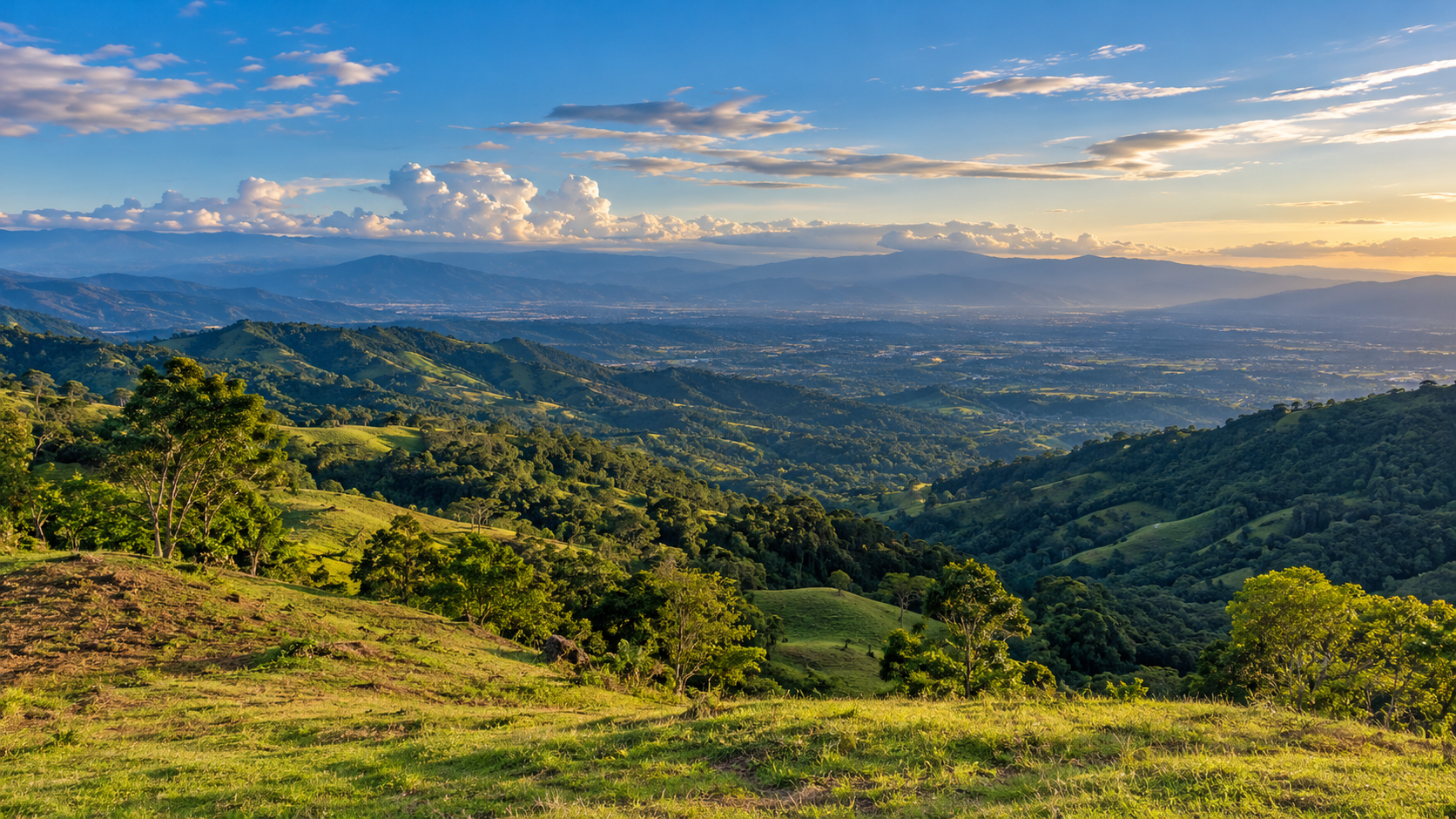
Much of Puriscal remains agricultural, with rolling hills, cattle farms, coffee plantations and forested valleys stretching across approximately 555 square kilometers. The canton has nine districts and a population of roughly 39,000 people, making it considerably less urbanized than the communities surrounding Costa Rica’s capital.
For developers, that rural character is part of the attraction. Instead of competing for smaller parcels surrounded by existing construction, investors can explore larger properties with the potential to accommodate multiple homes, generous lot sizes and shared green spaces.
One of Puriscal’s strongest selling points is its climate. Much of the area’s populated highlands lies at elevations that offer warm days and cooler evenings, providing a comfortable alternative to the heat and humidity found along Costa Rica’s coasts.
Climate matters in residential development because it influences everything from architectural design to the cost of operating a home. In many parts of Puriscal, natural ventilation can reduce the need for air conditioning, while covered terraces, gardens and outdoor living areas can become central features of a property.
The landscape offers another advantage. Hillside properties throughout the canton can provide mountain views, green valleys and, from certain locations, sweeping views toward the Central Valley. Developers who preserve these natural features can create properties where the scenery and surrounding countryside are major selling points.
This makes Puriscal particularly interesting for projects built around privacy, open space and a connection to nature rather than the amenities of a conventional urban subdivision.
Location also works in the area’s favor. Santiago de Puriscal, the canton’s main town, is approximately 43 kilometers southwest of San José. It provides supermarkets, banks, pharmacies, schools, hardware stores and other everyday services, reducing the need for residents to travel to the capital for routine purchases.
The wider San José metropolitan area, including its major hospitals, shopping centers and international airport, remains accessible by road, although travel times vary considerably depending on the property, traffic and road conditions.
For developers marketing properties to retirees, remote workers or families seeking more space, that combination can be appealing. Residents can enjoy a rural setting without being completely separated from the services available in Costa Rica’s principal urban region.
Land acquisition costs are another reason to examine Puriscal. Established markets such as Escazú, Santa Ana and parts of Atenas carry higher prices in many desirable residential areas. Puriscal offers developers an opportunity to investigate larger rural properties that may provide more land for the initial investment.
However, acquisition price alone does not determine the value of a development. Road construction, drainage, electricity, water systems and the amount of land suitable for building can significantly affect the final cost. A less expensive hillside property may ultimately require more investment than a higher-priced parcel with essential infrastructure already installed.
For that reason, investors should compare the total cost of bringing a project to market, not simply the advertised price per square meter. The type of residential development also deserves consideration. Puriscal is not necessarily suited to the same projects that succeed in downtown San José or heavily developed coastal destinations.
Its strengths suggest opportunities for smaller residential communities, estate-sized lots, private homes surrounded by gardens and developments that retain substantial natural areas.
These concepts may appeal to buyers who want a quieter lifestyle, room for fruit trees and gardens, and greater separation between neighboring houses. Rather than creating another densely built residential community, developers have an opportunity to make the land itself part of the attraction.
There is also potential for projects that incorporate sustainable design, forest preservation, walking trails and small-scale agriculture. Such features can strengthen a development’s identity while preserving the surroundings that make the property attractive in the first place.
Of course, a promising location does not guarantee a successful project. Puriscal remains an emerging development market rather than a proven high-volume residential destination. The municipality’s own competitiveness assessment identifies transportation infrastructure and limited construction activity among the canton’s challenges. Some rural roads require improvement, and the quality of electrical service and other infrastructure can vary by location.
Developers must also account for Costa Rica’s land-use rules, building permits, environmental protections and requirements for dividing properties into residential lots. Water availability and legally recorded road access are especially important. On steeper sites, soil stability, drainage and engineering costs can determine how much land can realistically be developed.
These considerations make properties with existing infrastructure particularly interesting. One example is Orchid Point Estates in San Antonio de Puriscal, a roughly 60-acre property with a surveyed plan showing 32 large lots. The project has internal roads, drainage and buried water lines already installed, with electricity available across much of the planned layout.
The property is being offered as a single development holding, giving a potential buyer the opportunity to evaluate the existing investment in infrastructure and determine how the land might fit a future residential project. Any development strategy would remain subject to verification of the applicable land-use rules, water rights and required approvals.
For investors, properties of this type offer a different starting point from purchasing undeveloped agricultural land. Existing infrastructure and planning work can reduce some of the uncertainty associated with a new project, although independent due diligence and additional investment remain essential.
Ultimately, Puriscal’s investment appeal comes from a combination of factors rather than any single advantage. Its mountain setting, larger rural properties, relatively low population density and access to San José create an environment worth evaluating for developers looking beyond Costa Rica’s better-known residential markets.
The opportunity is not necessarily to transform Puriscal into another Escazú or Atenas. Its appeal may lie in preserving the qualities that distinguish it from those places.
For developers who understand the value of space, privacy, natural scenery and carefully planned residential communities, Puriscal offers an opportunity to explore a different approach to real estate investment in Costa Rica.
Explore a Development Opportunity in Puriscal
Orchid Point Estates offers approximately 60 acres in San Antonio de Puriscal, with a surveyed 32-lot plan and substantial infrastructure already in place. The property is available as a complete development holding for investors interested in evaluating residential development opportunities in Costa Rica.